Fact Sheets
Selecting a Solar Sheep Grazier: Key Factors and Considerations
What characteristics, experience, and requirements do solar developers consider when selecting a solar sheep grazier to manage the vegetation on their site? Our recently launched fact sheet, Selecting a Solar…
Best Practices: Water Hauling Strategies for Solar Grazing Operations
How do graziers provide water for their livestock on solar sites without on-site access? ASGA’s recently released fact sheet, Best Practices: Water Hauling Strategies for Solar Grazing Operations, covers valuable…
Best Practices: Why are Livestock Guardian Dogs Essential for Solar Grazing?
What are livestock guardian dogs (LGDs), and how are they used for solar grazing? This fact sheet is a helpful resource to send to solar companies, O&M providers, and other…

Best Practices: Livestock Guardian Dogs (LGDs) in Solar Grazing
What factors need to be considered for livestock guardian dog (LGD) owners to successfully operate in a solar grazing environment? This fact sheet covers best practices for keeping LGDs in…
- « Previous
- 1
- 2
**Click on the name or image of the fact sheet to access it.
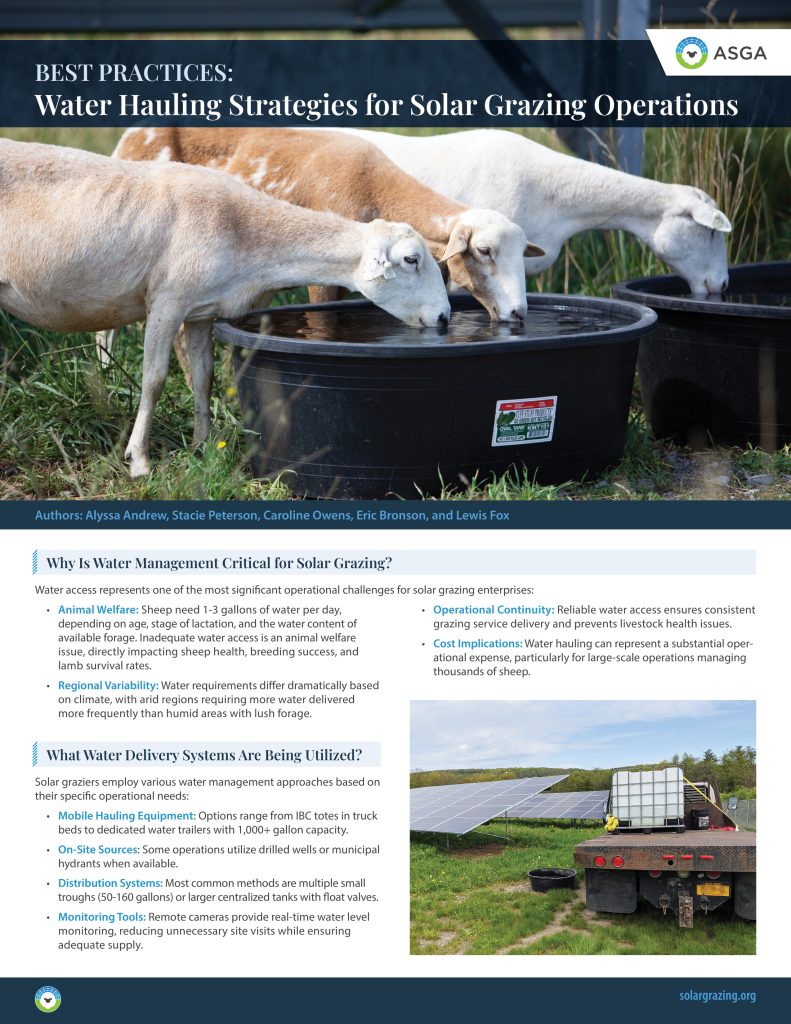
This fact sheet covers valuable information on selecting the appropriate method for providing water for your solar grazing operation.
For questions or to request print proofs, email info@solargrazing.org
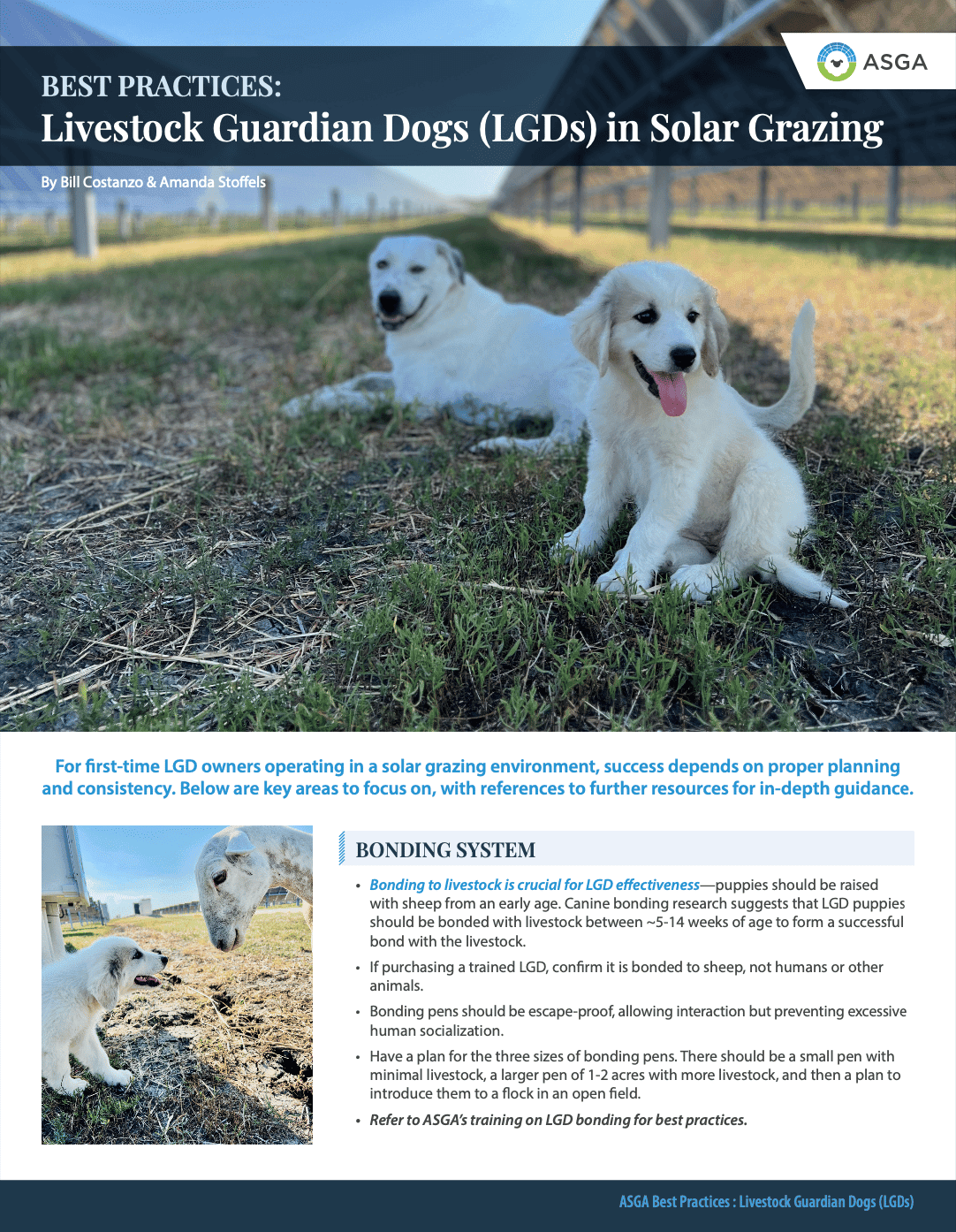
This fact sheet highlights best practices for solar graziers using livestock guardian dogs to protect their flocks on solar sites.
For questions or to request print proofs, email info@solargrazing.org
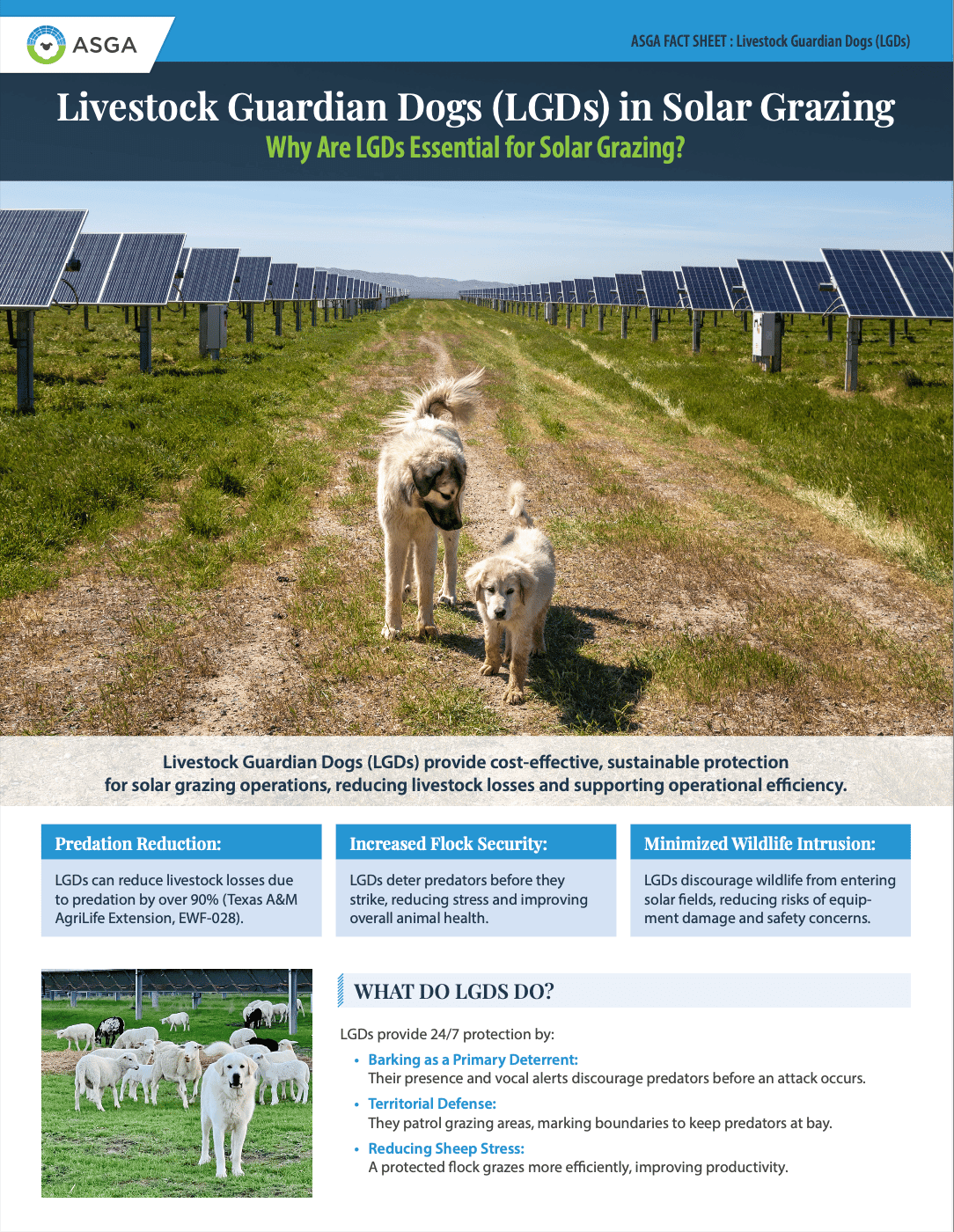
This resource is designed to help solar asset owners and operators understand the value of Livestock Guardian Dogs and how they can be safely managed in solar grazing operations on their sites.
For questions or to request print proofs, email info@solargrazing.org
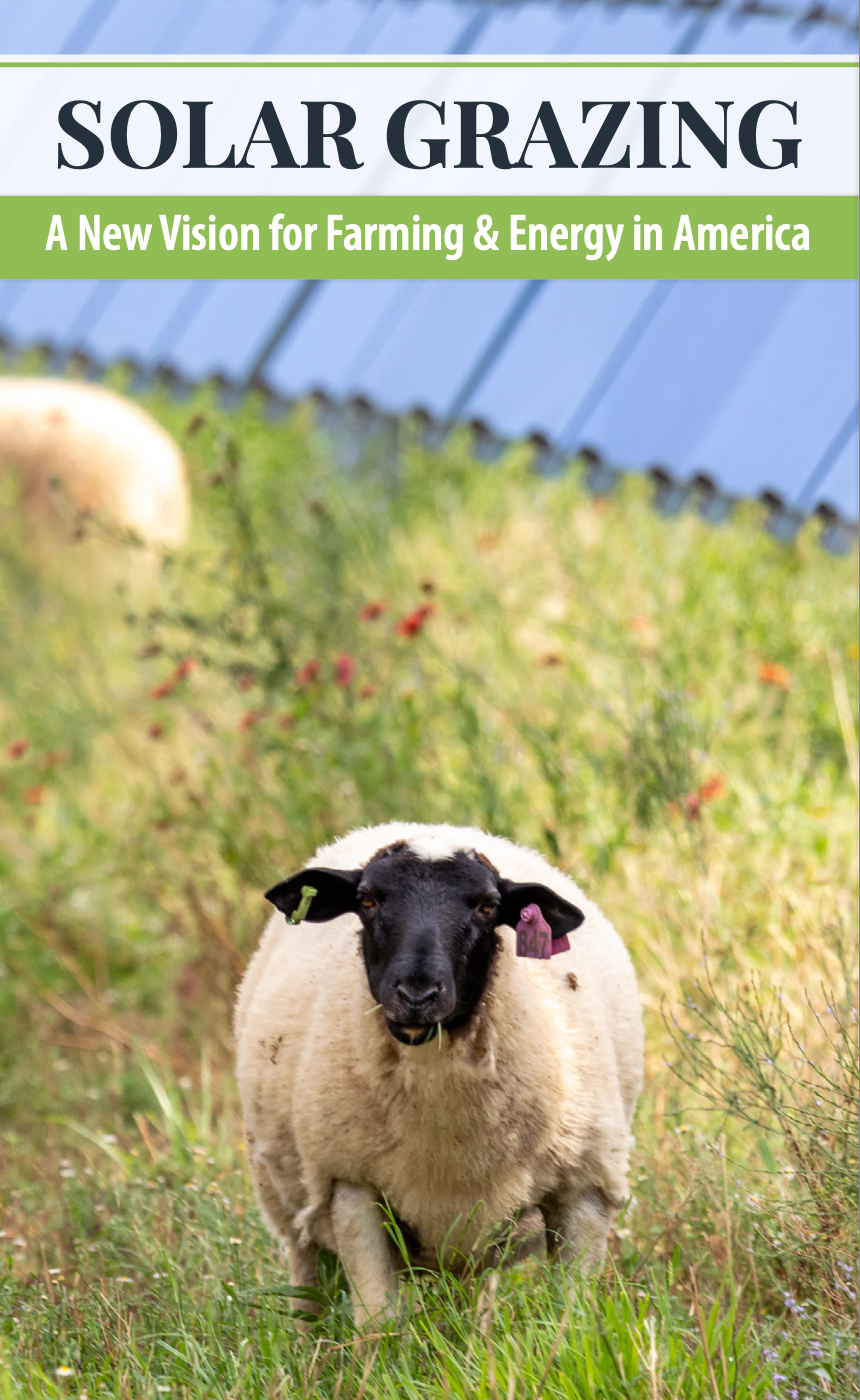
This new ASGA pamphlet provides an overview of the landscape of solar grazing, ASGA's work, solar grazing best practices, and the benefits of grazing for land management at solar sites.
For questions or to request print proofs, email info@solargrazing.org
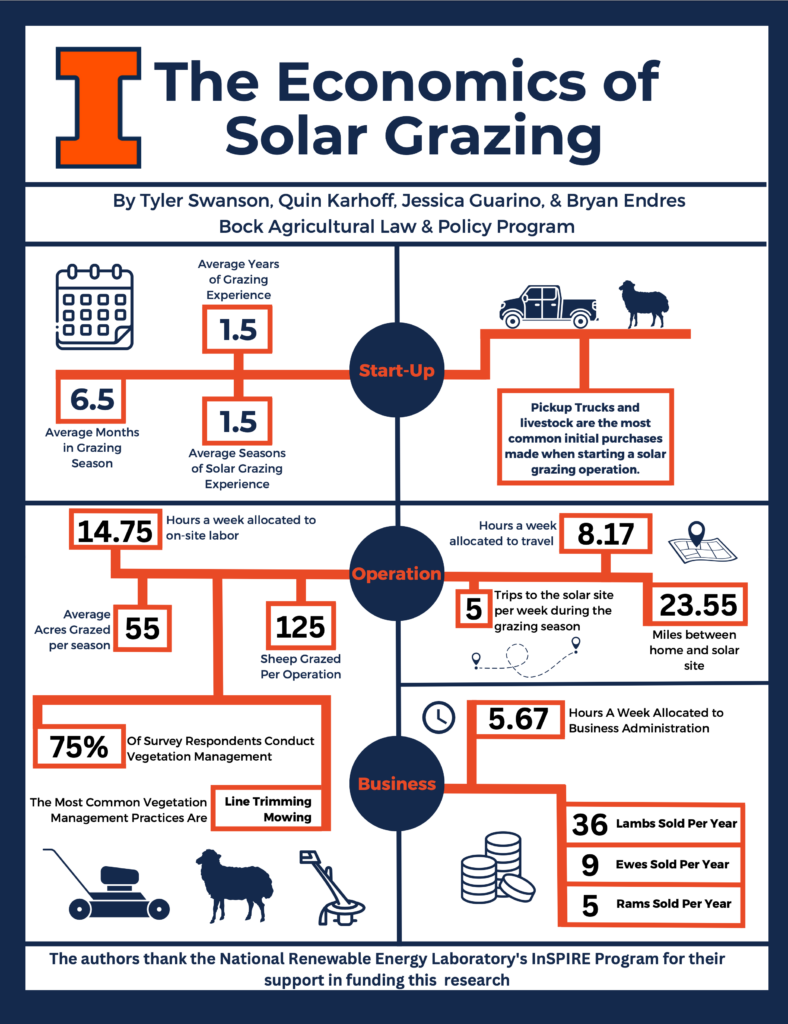
Undergraduate students Tyler Swanson and Quin Karhoff surveyed American solar graziers to identify the costs and revenues associated with solar grazing. They were supported by Post-Doctoral Researcher Jessica Guarino and Professor A. Bryan Endres.
Reach out to Tyler Swanson with questions: tylerswanson@arizona.edu
Read their previous research paper on solar grazing regulations:
- Emerging Agrivoltaic Regulatory Systems: A Review of Solar Grazing | University of Illinois
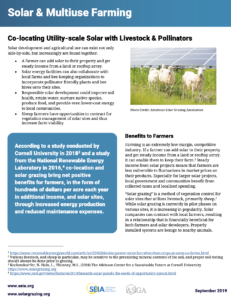
Solar development and agricultural use can exist not only side-by-side, but increasingly are found together.
-
- A farmer can add solar to their property and get steady income from a land or rooftop array.
- Solar energy facilities can also collaborate with local farms and bee-keeping organizations to incorporate pollinator friendly plants and bee hives onto their sites.
- Responsible solar development could improve soil health, retain water, nurture native species, produce food, and provide even lower-cost energy to local communities.
- Sheep farmers have opportunities to contract for vegetation management of solar sites and thus increase farm viability.
Learn more at the SEIA website: https://www.seia.org/research-resources/solar-multiuse-farming

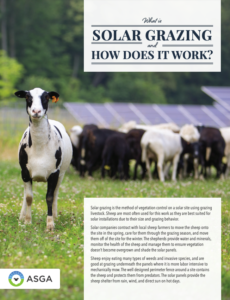
In this downloadable brochure, you'll find answers to these questions:
- What is solar grazing?
- How does solar grazing work?
- Does solar grazing provide a meaningful opportunity for farmers?
- Why do sheep farmers participate in solar grazing?
- Do farmers need special sheep to get under the panels?
- Who does this and where?
- What about the bees?
- This brochure was produced by ASGA.
- https://solargrazing.org
- For more information and for assistance in getting your flock started with solar grazing sites, please contact ASGA at info@solargrazing.org
-
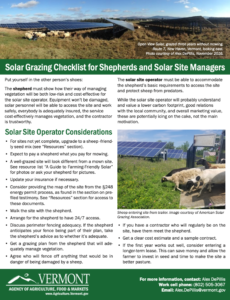
In this downloadable checklist, you'll find information about:
- Solar Site Operator Considerations
- Shepherd Considerations
- Considerations for Both Parties
- Resources & More Information
- This brochure was produced by Vermont Agency of Agriculture, Food & Markets
- www.agriculture.vermont.gov
- For more information, contact Alex DePillis at Alex.DePillis@vermont.gov or (802)505-3067