
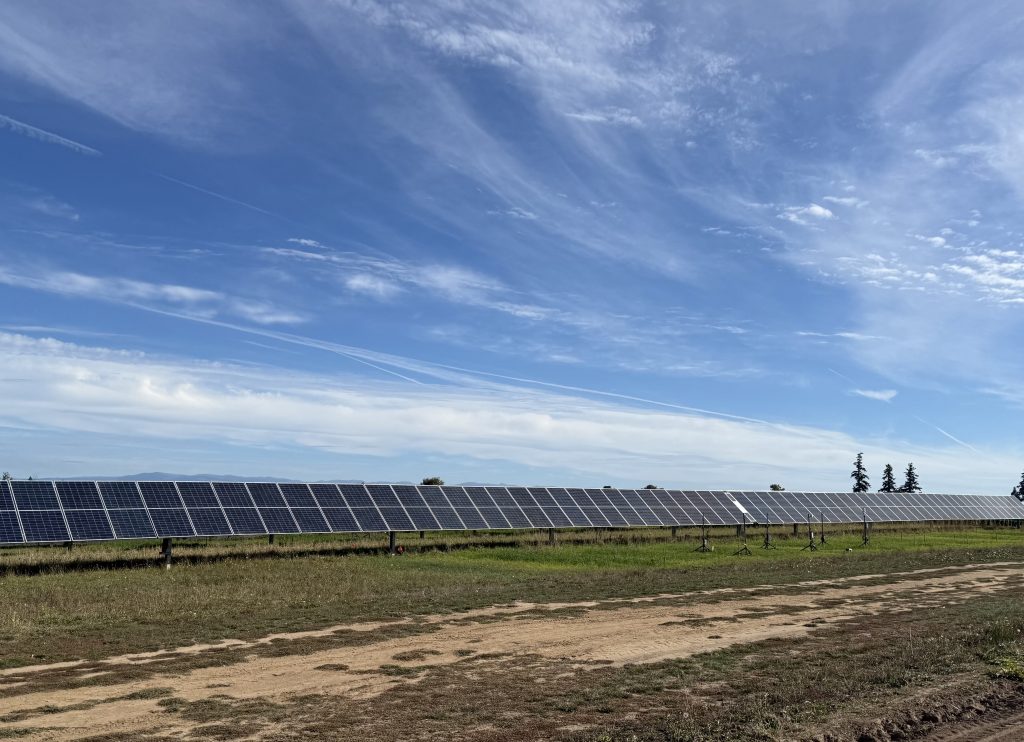
The North Willamette Research and Extension Center (NWREC) at Oregon State University welcomed visitors for an Agrivoltaics Open House, offering an opportunity to learn more about the intersection of solar energy and agriculture and the growing research efforts happening in the Pacific Northwest.
The event guided attendees through the research site and shared insights into its agrivoltaic design and ongoing projects. Visitors had the opportunity to explore how research, agricultural production, and solar energy can be integrated while learning about the potential benefits and challenges of agrivoltaic systems.

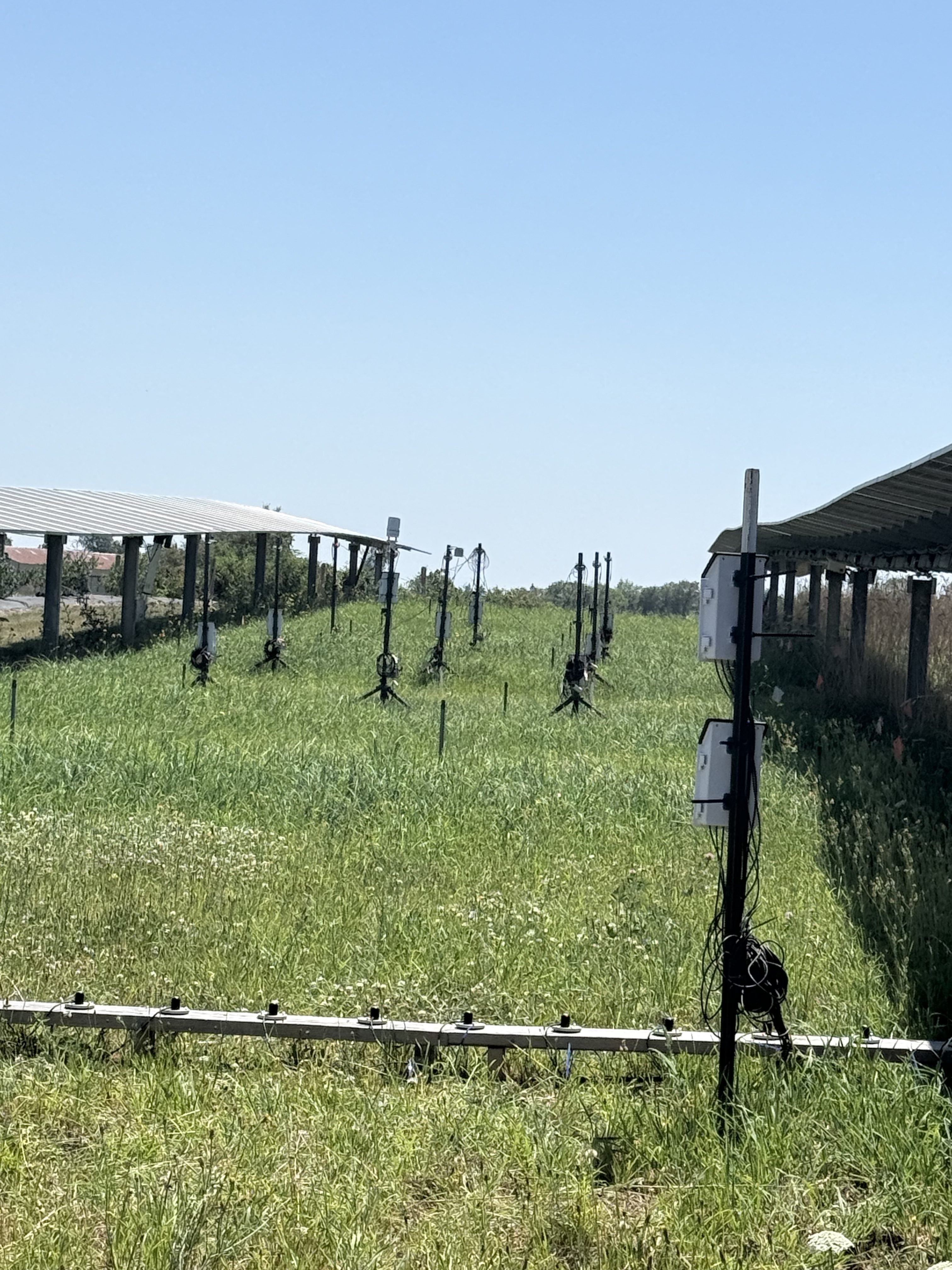
One research project highlighted during the open house focuses on using orchard grass as a reference crop to better understand growing conditions within agrivoltaic systems. Researchers are studying how orchard grass responds to varying levels of light and water availability across different microclimates beneath and around the solar array. By collecting this data, researchers can build a better understanding of crop responses under different growing conditions and use the findings alongside other crops in a reference crop library to help predict how those crops may perform in similar environments. This approach could provide valuable insights for selecting crops and designing agrivoltaic systems that support agricultural productivity.
ASGA Project Coordinator Alyssa Andrew also introduced attendees to the American Solar Grazing Association (ASGA), sharing an overview of the organization’s work and the role of solar grazing in agrivoltaics. She highlighted how managed livestock grazing can provide vegetation management at solar sites while creating additional opportunities for farmers and ranchers.
John Langdon was also in attendance, providing additional context on his work with Solar Saves Farms to advance awareness and adoption of agrivoltaics. His perspective helped connect the research taking place at NWREC with broader efforts to promote farmer-centered solar development.
The open house also welcomed students from a local community college who are working toward opportunities to become involved in agrivoltaic research. Their participation highlighted the importance of hands-on learning and developing the next generation of professionals interested in the future of agriculture and renewable energy.